Navigating the vast landscape of casino games can feel overwhelming for a newcomer. The objective is not just to play, but to understand the game, manage expectations, and enjoy the experience without immediate financial pressure. This guide focuses on identifying casino games that offer straightforward rules, a gentle learning curve, and transparent mechanics, making them ideal starting points for beginners. The emphasis is on accessibility and enjoyment, allowing new players to build confidence before exploring more complex options.
Key Considerations for Beginner Casino Games
Before diving into specific games, understanding what makes a game beginner-friendly is crucial. These factors influence both your initial experience and long-term enjoyment:
- Rule Simplicity: The fewer rules to memorize and the more intuitive the gameplay, the better. Complex strategy charts or multi-stage betting rounds can deter new players.
- Pace of Play: Games with a slower pace allow beginners more time to think, process information, and make decisions without feeling rushed. Fast-paced games can lead to quick losses and confusion.
- House Edge: While all casino games favor the house, some have a significantly lower house edge than others. Understanding this helps manage expectations regarding potential returns over time. Games with lower house edges offer better value per bet.
- Strategic Depth: Some games are purely luck-based, requiring no skill beyond placing a bet. Others involve strategic decisions. For beginners, games with minimal or optional strategy are often preferred, allowing them to focus on learning the core mechanics.
- Betting Options: A game with a wide range of betting limits, particularly low minimum bets, is beneficial for beginners who want to play conservatively and extend their bankroll.
- Social Interaction: Some games are inherently more social than others. For those who prefer a less intimidating environment, solo play or games with minimal interaction are often a good start.
1. Slots
Slot machines are the quintessential beginner casino game due to their unparalleled simplicity. The core mechanic involves selecting a bet size and spinning reels, with payouts determined by matching symbols across paylines. There's no strategy to learn, no opponents to outwit, and the outcome is entirely based on chance. Modern slots offer diverse themes, engaging graphics, and bonus features that add entertainment without complicating the fundamental gameplay. They are accessible in terms of minimum bets and provide instant gratification, making them a low-pressure entry point into casino gaming.
Best for: Players seeking pure entertainment, instant results, and no strategic thinking. Ideal for those who enjoy vibrant themes and varied bonus rounds.
Pros:
- Extremely easy to understand and play; no skill required.
- Wide variety of themes, features, and betting limits.
- Can offer significant payouts from small bets (jackpots).
- Low minimum bets make bankroll management simple.
Cons:
- High house edge compared to many table games.
- Outcomes are entirely random; no player influence.
- Can be highly addictive due to rapid play and visual stimuli.
Verdict: Slots are the perfect starting point for absolute beginners who want to experience the thrill of a casino without any learning curve. Manage your bankroll carefully, as the high house edge means losses can accumulate quickly over extended play.
2. Roulette
Roulette is a classic casino game known for its iconic spinning wheel and straightforward betting options. For beginners, the key is to stick to outside bets, such as Red/Black, Odd/Even, or High/Low (1-18/19-36). These bets offer nearly a 50% chance of winning (minus the green zero pocket) and pay out 1:1. The rules are simple: place your chips on the desired outcome, the dealer spins the wheel, and the ball lands in a numbered slot. Understanding the basic outside bets allows beginners to participate immediately without needing to grasp complex inside bets or advanced strategies.
Best for: Players who enjoy a classic casino atmosphere, straightforward betting, and a relaxed pace. Excellent for those who prefer simpler odds and less strategic depth.
Pros:
- Rules are easy to learn, especially for outside bets.
- Offers a wide range of betting options, from low-risk to high-risk.
- Slower pace of play allows for contemplation between rounds.
- Social game in a live casino setting.
Cons:
- House edge is consistent across most bets (e.g., 2.70% in European Roulette) and higher than some other table games.
- Inside bets can be confusing for new players and carry higher risk.
- No strategy can overcome the inherent house advantage.
Verdict: Roulette, particularly when focusing on outside bets, provides an accessible and engaging introduction to table games. It offers clear odds and a distinct casino feel without demanding complex decisions from the player.
3. Baccarat
Baccarat stands out as one of the simplest card games in a casino, often misunderstood as complex due to its association with high rollers. In reality, players only need to make one decision: bet on the 'Player' hand, the 'Banker' hand, or a 'Tie'. The dealer handles all card drawing rules, which are fixed and do not involve player choices. The objective is for the chosen hand to have a total closer to nine. The Banker bet has a slightly lower house edge, making it a statistically sound choice for beginners.
Best for: Players seeking a card game with minimal decision-making, a low house edge on certain bets, and a sophisticated image without the complexity.
Pros:
- Extremely simple rules; no skill or strategy required beyond choosing a bet.
- One of the lowest house edges among all casino games (especially on the Banker bet).
- Fast-paced yet easy to follow.
- Often offers low minimum bets in mini-baccarat versions.
Cons:
- The card drawing rules can seem arbitrary if you try to understand them, but they don't impact player decisions.
- Tie bet has a very high house edge and should be avoided.
- Can feel less engaging for players who prefer strategic involvement.
Verdict: Baccarat is an excellent choice for beginners looking for a card game with an exceptionally low house edge and virtually no strategic demands. Focus on the Banker bet for the best odds.
4. Blackjack
Blackjack is a card game where the goal is to have a hand total closer to 21 than the dealer's hand, without exceeding 21. While it involves more decision-making than slots or baccarat, the basic strategy is relatively simple to learn and significantly reduces the house edge. Beginners can quickly grasp the fundamental actions: 'Hit' (take another card), 'Stand' (take no more cards), 'Double Down' (double bet, take one more card), and 'Split' (separate pairs into two hands). Mastering basic strategy charts, which are widely available, allows new players to make optimal decisions and enjoy one of the best odds in the casino.
Best for: Players who want a card game with strategic elements, a low house edge with optimal play, and direct interaction with the game's outcome.
Pros:
- One of the lowest house edges in the casino when played with basic strategy.
- Player decisions directly influence the outcome.
- Engaging and interactive gameplay.
- Basic strategy is logical and learnable.
Cons:
- Requires memorization of basic strategy to achieve optimal odds.
- Incorrect decisions can significantly increase the house edge.
- Can be fast-paced, requiring quick decision-making.
Verdict: Blackjack is an ideal game for beginners willing to invest a small amount of time learning basic strategy. This effort is rewarded with a highly engaging game and some of the best player odds available.
5. Video Poker (Jacks or Better)
Video Poker, particularly the 'Jacks or Better' variant, offers a unique blend of slots' solo play and poker's strategic depth. Players are dealt five cards and choose which to hold and which to discard, aiming to form the best possible five-card poker hand. A pair of Jacks or better is typically the minimum for a payout. Understanding the basic strategy for Jacks or Better is straightforward, involving decisions on which cards to keep to maximize the chance of a winning hand. The paytable is always visible, allowing players to assess potential returns for different hands.
Best for: Players who enjoy solo card games, a blend of luck and skill, and transparent odds. Excellent for those who appreciate strategic thinking without the pressure of playing against others.
Pros:
- Very low house edge (can be under 0.5% with optimal strategy on full-pay machines).
- Player decisions directly impact the outcome.
- Strategy is learnable and consistent.
- Offers a sense of control and skill development.
Cons:
- Requires learning basic strategy to achieve optimal returns.
- Can be less visually stimulating than modern slots.
- Finding "full-pay" machines with the best paytables can be challenging.
Verdict: Jacks or Better video poker is a top choice for beginners who enjoy card games and want to engage their minds with a simple, yet effective, strategy. The transparent odds and low house edge make it a rewarding option.
6. Craps (Pass/Don't Pass)
Craps can appear intimidating with its bustling table and complex betting layout, but beginners can participate by focusing on just two main bets: the 'Pass Line' and the 'Don't Pass Line'. These bets are the most fundamental in craps, offering nearly even odds (just under 50%) and a low house edge. The Pass Line bet wins if a 7 or 11 is rolled on the come-out roll, or if the point number is rolled again before a 7. The Don't Pass Line is the opposite. Sticking to these two bets allows beginners to enjoy the game's excitement and social atmosphere without needing to understand the myriad of other propositions.
Best for: Social players who enjoy a high-energy atmosphere and want to participate in a dice game with simple, low-house-edge bets.
Pros:
- Pass/Don't Pass bets have one of the lowest house edges in the casino.
- Highly social and exciting game in a live setting.
- Simple to learn the basic bets for immediate participation.
- Offers the unique option to take/lay 'Odds' bets, which have zero house edge.
Cons:
- The table layout and multitude of other bets can be overwhelming.
- Fast-paced gameplay can be challenging for new players.
- Requires understanding specific dice combinations and sequences.
Verdict: Craps is an exhilarating game, and beginners can easily join the action by focusing exclusively on the Pass or Don't Pass lines. This approach offers excellent odds and a dynamic social experience without the complexity of other bets.
7. Keno
Keno is a lottery-style game that is exceptionally easy to understand and play. Players select a set number of spots (usually between 1 and 20) on a grid, and then 20 numbers are drawn randomly. Payouts are determined by how many of the player's selected numbers match the drawn numbers, with the paytable clearly displayed. There is no strategy involved beyond choosing numbers, making it a purely luck-based game. Keno offers a relaxed pace, as draws often occur every few minutes, allowing players to enjoy other activities simultaneously.
Best for: Players who enjoy lottery-style games, a slow pace, and the excitement of large potential payouts from small bets. Ideal for casual play.
Pros:
- Extremely simple rules and gameplay.
- Can offer very large payouts for hitting many numbers.
- Relaxed pace of play.
- Often available with low minimum bets.
Cons:
- Very high house edge, typically one of the highest in the casino.
- Purely a game of chance with no strategic element.
- Odds of hitting many numbers are extremely low.
Verdict: Keno is a straightforward game for beginners seeking lottery-like thrills with minimal effort. While the potential payouts are attractive, the high house edge means it's best played for fun rather than expecting consistent returns.
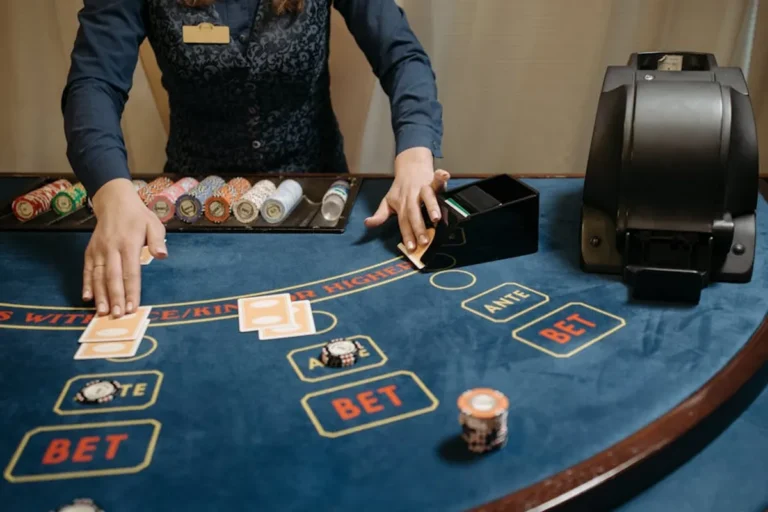
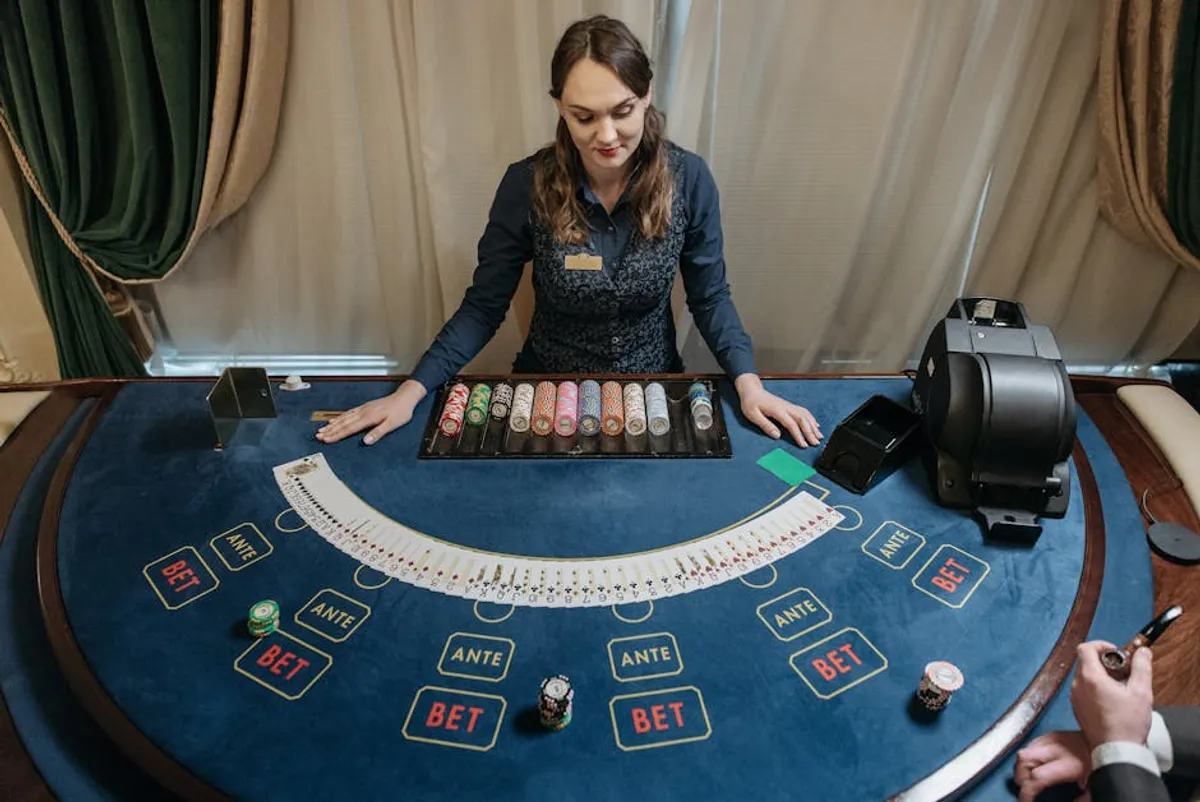
8. Three Card Poker
Three Card Poker simplifies traditional poker into a fast-paced game against the dealer, not other players. The objective is to get a better three-card hand than the dealer. Players make an 'Ante' bet, receive three cards, and then decide whether to 'Play' (make an additional bet) or 'Fold'. There's also an optional 'Pair Plus' side bet that pays out for certain hand combinations regardless of the dealer's hand. The strategy is relatively simple: always play a hand of Queen-6-4 or better, and fold anything worse. This makes decision-making manageable for beginners.
Best for: Players who enjoy poker hand rankings but prefer a simpler, faster game against the dealer without bluffing or complex betting rounds.
Pros:
- Easy to learn poker hand rankings.
- Strategy is straightforward: play Q-6-4 or better.
- Fast-paced and engaging.
- Optional side bets add extra excitement.
Cons:
- House edge is higher than Blackjack or Baccarat.
- The Pair Plus side bet typically has a higher house edge.
- Requires understanding basic poker hand values.
Verdict: Three Card Poker is an excellent bridge for beginners interested in poker, offering a simplified version with clear rules and a manageable basic strategy. It provides the thrill of poker without the intimidation of a full poker table.
9. Sic Bo
Sic Bo is an ancient Chinese dice game played with three dice. The table layout might look complex, but many bets are as simple as betting on the total of the three dice, or whether the outcome will be 'Big' (11-17) or 'Small' (4-10). These 'Big' and 'Small' bets offer nearly even odds (similar to roulette's Red/Black) and are the best entry point for beginners. The game is purely luck-based, with no strategy required beyond choosing your bet. It offers a unique cultural flavor and a different type of randomness compared to cards or wheels.
Best for: Players looking for a dice game alternative to craps, who prefer simple, even-money bets, and enjoy a game of pure chance with an exotic feel.
Pros:
- Extremely simple to understand basic bets like 'Big' and 'Small'.
- Purely a game of chance, no skill required.
- Fast-paced and exciting with multiple dice rolls.
- Unique visual and auditory experience in live casinos.
Cons:
- Many other bets on the table have very high house edges and should be avoided.
- The table layout can look intimidating initially.
- House edge on 'Big'/'Small' bets is comparable to roulette, higher than Baccarat.
Verdict: Sic Bo is a fun and easy-to-learn dice game for beginners, provided they stick to the 'Big' and 'Small' bets. It offers a different kind of casino experience rooted in chance and rapid outcomes.
10. Dragon Tiger
Dragon Tiger is an extremely simplified two-card version of Baccarat, popular in Asian casinos. The dealer deals one card to the 'Dragon' spot and one card to the 'Tiger' spot. Players simply bet on which spot will receive the higher card, or if it will be a 'Tie'. Aces are low, and King is high. There are no additional cards drawn and no player decisions beyond placing the initial bet. This makes it one of the most straightforward card games available, ideal for beginners who want minimal complexity.
Best for: Absolute beginners seeking the simplest possible card game, with immediate results and no strategic decisions whatsoever.
Pros:
- The simplest card game to learn, with only three main betting options.
- Fast-paced and easy to follow.
- Low minimum bets often available.
- No strategic thinking required.
Cons:
- The Tie bet has a very high house edge and should be avoided.
- Can be less engaging for players who prefer more depth or strategy.
- No player influence on the outcome.
Verdict: Dragon Tiger is the ultimate game for beginners who want to dip their toes into card games without any learning curve. It's pure chance, fast, and remarkably easy to understand, making it perfect for a quick, uncomplicated session.
11. Bingo
Bingo is a game of chance where players mark numbers on a card as they are called out randomly. The first player to complete a predetermined pattern (e.g., a line, a full house) wins. It requires no skill beyond paying attention to the called numbers and marking your card. Online versions often auto-daub, removing even that minimal requirement. Bingo is inherently social, often played in a relaxed, community-focused environment, making it less intimidating than traditional casino table games.
Best for: Players seeking a highly social, relaxed, and purely luck-based game with a strong community feel. Ideal for those who enjoy anticipation and simple rules.
Pros:
- Extremely easy to learn and play; no skill required.
- Highly social and community-oriented.
- Relaxed pace of play.
- Often offers low-cost entry and extended playtime.
Cons:
- House edge can be high, depending on the number of players and card prices.
- Outcomes are entirely random.
- Can be slow-paced for those seeking constant action.
Verdict: Bingo offers a welcoming and straightforward casino experience, perfect for beginners who prioritize social interaction and pure chance over strategic gameplay. It's a low-pressure way to engage with gaming.
12. Scratch Cards
Scratch cards, or scratch-offs, are instant-win games that require no skill or decision-making. Players purchase a card and scratch off designated areas to reveal symbols or numbers. If the revealed pattern matches a winning combination, a prize is awarded instantly. They are the epitome of immediate gratification and simplicity, making them a popular choice for beginners looking for a quick thrill without any rules to learn. Online versions replicate this experience digitally, often with animations and sound effects.
Best for: Players seeking immediate results, no strategic involvement, and a very low-commitment gaming experience. Ideal for quick, casual play.
Pros:
- Instant results and gratification.
- No rules to learn, completely skill-free.
- Very low cost per play, often with the chance for significant wins.
- Accessible and available widely.
Cons:
- Very high house edge, often among the highest in any gambling format.
- Purely luck-based, offers no player influence.
- Can be less engaging for extended periods compared to other games.
Verdict: Scratch cards provide the most basic form of casino entertainment for beginners. They are perfect for a quick, no-fuss gamble, but players should be aware of the high house edge and manage their expectations accordingly.
Choosing the Right Game for You
The "best" casino game for a beginner ultimately depends on individual preferences. If you prioritize pure, unadulterated chance and visual excitement without any strategic demands, slots or scratch cards are ideal. For those who enjoy a social atmosphere and straightforward odds, roulette (with outside bets) or craps (Pass/Don't Pass) offer engaging experiences. If you're looking to engage your mind with a manageable strategy that improves your odds, blackjack or Jacks or Better video poker are excellent choices. Baccarat and Dragon Tiger provide card game action with minimal decision-making. Consider what aspects of gaming appeal most to you—be it the thrill of a big win, the social interaction, or the satisfaction of making strategic choices—and select a game that aligns with those preferences. Start with low stakes to familiarize yourself with the game mechanics and always play within your budget.
Frequently Asked Questions
Q: What is the easiest casino game to win?
A: Games like Blackjack and Baccarat (Banker bet) offer the lowest house edge, meaning they provide the best statistical odds for the player over time, assuming optimal play in Blackjack. However, no game guarantees a win.
Q: Should beginners play with real money?
A: It's advisable for beginners to start with free-play versions of games if available, to understand the rules and mechanics without financial risk. Once comfortable, begin with very low stakes to manage your bankroll effectively.
Q: How important is strategy for beginners?
A: For games like slots, roulette, or keno, strategy is non-existent or minimal. For games like Blackjack or Video Poker, learning basic strategy is crucial to significantly improve your odds and reduce the house edge, making it a worthwhile investment for beginners.
Q: What is a